Google AI Overviews Are Killing Organic Traffic — Here's How to Get Cited Instead of Clicked
AI Overviews cut publisher search traffic 10-40% and 58% of Google searches now end without a click. Here's what actually earns a citation instead.

Search traffic isn't declining because people stopped searching. It's declining because Google started answering the question itself, on the results page, without making anyone click through to find out.
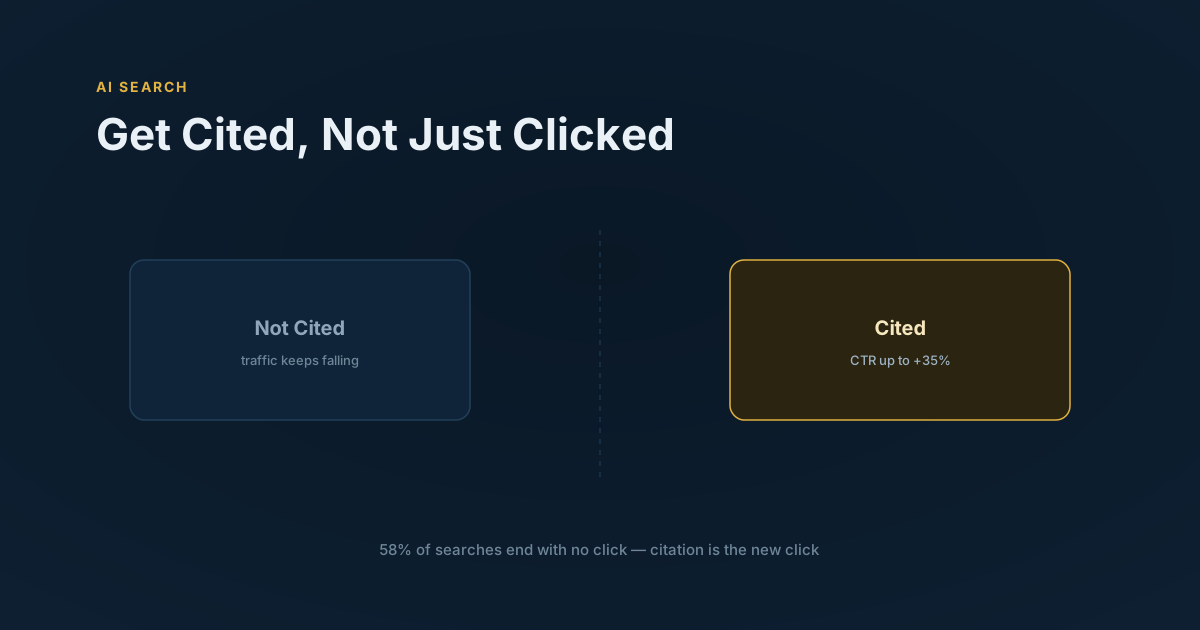
The numbers are no longer speculative. Median referral traffic from Google Search to premium publishers is down roughly 10% year-over-year, with some sites reporting drops of 20-40%. Some publishers have seen click-through rates on affected queries fall by as much as 89%. 58% of Google searches now end without a single click.
If your content strategy is still built entirely around "rank #1 and the traffic follows," that assumption is quietly breaking. Here's what the data actually says, and what to do about it.
The Traffic Story, in Numbers
- Organic CTR on queries that trigger an AI Overview fell from 1.76% to 0.61% by September 2025 — a 65% collapse — then rebounded 85% to 2.4% by February 2026 as users adjusted to the new results-page layout.
- The impact isn't uniform. Education, B2B tech, restaurants, healthcare, and insurance sites face AI Overview trigger rates of 75-83% on their core queries — meaning the overwhelming majority of their traditional ranking opportunities now show an AI Overview first.
- Smaller, independent sites have absorbed the worst of it: roughly 60% of search referrals lost over two years, compared to 22% for large publishers who have more brand-search and direct traffic to fall back on.
- The revenue effect extends past organic — Google Network ad revenue (AdSense, AdMob, Ad Manager) fell 4% year-over-year, suggesting the traffic drop is showing up in publisher balance sheets, not just analytics dashboards.
Put together: search isn't sending less interest your way, it's increasingly answering the interest itself and only sending traffic through in specific, narrower circumstances.
The Silver Lining: Citations Convert Differently
Here's the part that gets buried under the doom-and-gloom traffic numbers. Getting cited inside an AI Overview isn't worthless — it's a different, smaller, higher-intent channel than a traditional blue-link click.
- Sites that earn a citation see CTR increases of up to 35% on that specific citation, relative to not being cited at all.
- AI-referred visitors — people who clicked through from an AI Overview or an AI chat answer — convert about 42% better than average organic visitors.
- They also spend 48% longer on site and generate 37% higher revenue per visit.
The pattern reads like this: fewer people click through overall, because most people's questions get answered on the results page. But the ones who do click through are further along, already primed by the AI's summary, and more likely to act. Less volume, better quality — which is a real tradeoff, not an unambiguous loss.
What Actually Gets Cited
AI Overviews (and answer engines like ChatGPT search and Perplexity) pull from pages the same way featured snippets always did, just with a sharper filter:
The pages that clear the "extractable answer" bar tend to share a few traits:
- 02Structured data, not just structured prose. Schema.org markup —
FAQPage,HowTo,Articlewith proper metadata — gives the model an unambiguous signal about what a page is actually claiming, rather than making it infer from paragraph text. - 04A direct answer near the top, not three paragraphs of preamble before the actual information. The content that gets quoted is the content that answers the question in the first sentence someone could plausibly lift.
- 06Specificity over marketing language. "Our industry-leading solution" isn't quotable. "The 2026 CAGR for this market is 13.78%" is.
- 08Freshness signals that are actually true, not just a
dateModifiedtag bumped without a real content change — models increasingly cross-reference claims against other sources, and stale content that claims to be fresh is a fast way to lose trust in aggregate.
This is, not coincidentally, the same discipline this blog already applies to itself — every post here ships with BlogPosting and, where relevant, FAQPage JSON-LD, specific numbers instead of vague claims, and direct answers up front. It's not a trick; it's just taking "write for a machine reader too" seriously instead of treating structured data as an SEO checkbox nobody actually looks at.
The Practical Playbook
Audit your existing content for extractability, not just keywords. Pick your ten highest-traffic pages and ask: if a model had to answer a question using only this page, could it lift a clean, correct sentence? If the honest answer requires reading four paragraphs to find the point, that's the fix.
Add structured data where it's actually true, not everywhere. FAQPage schema only helps if the page genuinely answers those questions clearly in the visible content — schema that oversells what's on the page is a fast way to get flagged as low-quality, not cited.
Run a bulk audit instead of checking pages one at a time. If you're auditing a site (yours or a client's) for AI-citation readiness, checking meta tags, JSON-LD, and structured data one URL at a time doesn't scale past a handful of pages. Tools built for bulk metadata extraction — pulling Open Graph tags, JSON-LD, and canonical data across a whole URL list at once — turn a multi-day manual audit into a same-afternoon spreadsheet.
Stop optimizing purely for position #1. Position #1 without an extractable answer can lose to position #4 with one. The ranking algorithm and the citation algorithm are related but not identical, and treating them as the same thing is the single most common mistake happening in SEO teams right now.
What This Doesn't Fix
Being cited doesn't restore the traffic volume that zero-click search took away — it recovers some value from a smaller slice of it. If your business model depends on raw pageview count (ad-supported content at scale), citations are a partial offset, not a solution, and the honest strategic conversation is broader: diversifying beyond organic-search-dependent traffic, building direct/email/community channels that don't route through a search results page at all.
Search isn't going away. But "get ranked, wait for clicks" as a complete strategy already has an expiration date on it, and the sites treating AI citation as a distinct, deliberate target — not an SEO afterthought — are the ones adapting fastest.